This article was born out of an interview with Davies Olakunle Emmanuel, the author of “If I’m being honest” and a personal inspiration in my creative journey. May you be as blessed by his story as I have been.
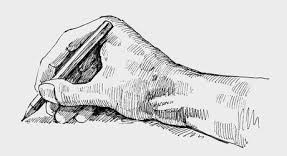
We’re all on our own individual journeys, and sometimes on our journeys, we face trials. When we hit those bumps on the road, lose control and slide off the cliff, we can either stay down and let the harshness of life leave us broken, or we can turn that pain around and direct it toward our purpose. This is the story of a young man who did precisely the latter. He sees life as a canvas to draw out its intricate realities through the paintbrush of words. And after getting to talk to him, one can see the hands of God in the carefully woven story of his life.
Davies Olakunle Emmanuel, 29, is paving the way for young Nigerian writers, and I wouldn’t even stop there. I believe he is setting the stage for young Nigerian creatives. Allow me to go a step further and say he is doing that for pretty much anyone who has a dream, a passion, a fire burning in them that needs not to be extinguished but to light up the world.
Raised in Lagos, Nigeria and currently residing in the nation’s capital, Abuja, Davies possesses a beautiful story, one with a few wrong turns but a beautiful destination. But before examining the challenges that held him back in his past, let’s take a look at the fruit that has sprouted from the tree of his life.
He recently released a book called “If I’m being honest,” a collection of short stories and poetry that speak to a broad range of issues plaguing our society. He chose that title because he wanted to show people that the idea of a “perfect Christian” is nothing more than a flashy facade that hides the true picture of this walk of faith. I guarantee that the words in this book will leave you gasping for air as your mind tries to catch up with the emotions bouncing around in your heart. Davies officially started writing poetry in 2011, but for three years before that, he was writing rap. People told him that his rap was “too emotional and too soft” and not fitting for that period’s hardcore, ‘tough-guy’ kind of rap. Those comments were a huge blow to the confidence he had in his writing, so he stopped for some time. Not long after, he realized his style of writing had a home, and that was poetry. So, in 2011, he started taking poetry seriously and branched into the different avenues for creative writing like spoken word, articles, and movie scripts, and was getting paid for some of the work he was doing for his school’s magazine. He studied aeronautical engineering while in school in Ghana, so his path to professional writing was anything but conventional. That was just one stop in the story God was writing for him.
If you read any of his works, you would understand why I asked this question, “How did you get so good at your craft?” While answering this question, he touched on an issue a lot of, if not all, creatives struggle with—inspiration. Davies explained how he initially used to wait for inspiration, but as any creative knows, inspiration is not a person to be summoned; we are usually on the receiving end of that ‘summoning.’ From the advice of role models in his life, he stopped waiting for inspiration to strike. He says he now thinks of a topic and visualizes “every angle and every idea that can come out from it.” He further explained, “Sometimes God gives me a phrase or a sentence, and then I start to build around it.” His main source of inspiration, though, is people. Always ready with a listening ear, he writes his stories from the inspiring stories of others. That way, he does not have to live through the circumstances in his stories to vividly convey that message to others. He says, “Inspiration is more of a response to hearing people’s problems.” Essentially, a person’s story goes in through his ear and comes out through his hands.
Another obstacle in most people’s creative journey is the fear of others. He says he tries to think of it this way, “If it blesses me, I am sure that one other person would be blessed by it. I write for one person. My writing, most times, you would think I’m talking to you because I write with only one person in my mind. I’m not trying to write for a crowd. And if one person is transformed by it, I’m okay. When you think of other people’s opinions, you start to coin your writing to fit their narrative, to fit their taste. And when you do it, you lose your originality; when you lose your originality, you forget why you started writing in the first place.”
Davies Emmanuel speaks with much wisdom, but that is owed to his many years of learning. He wasn’t always the man he is today, and he wasn’t always walking the straight and narrow, but it is clear how God has turned his ‘mess into a message.’ He says, “I believe God lets us go through what we go through for our assignment that is ahead of us.” Growing up without his father, Davies carried a lot of unforgiveness in his heart for much of his younger years. That bitter poison of unforgiveness and anger led to him trying to fight that pain with vices such as drugs and women. Thankfully, God had a plan for him and that wasn’t the end of his story. One could say he had a ‘road to Damascus’ conversion.
On a normal day in 2011, he was walking and noticed a Christian gathering in the park. Still strolling, he listened as the preacher talked about God’s love and how His love would meet us wherever we are. As the words of the preacher rang in his ears, he noticed himself drawing closer and closer to the gathering. Soon enough, he found himself at the front of the gathering—not in response to an altar call—and the preacher, right then and there, helped him invite Jesus into his heart. Being guided by that very preacher for a couple of months after making the life-changing decision to follow Jesus, Davies had much to learn about being a faithful follower of Christ. But, thankfully, we rest in knowing that sanctification is a lifelong process.
The fire in his faith spreads to his work and provides him an ‘anchor’ as he always strives to give God his best work, doing all that he does to the glory of God. His relationship with God serves as the foundation for what he writes, and he makes sure that message translates in his work.
For everyone with a dream, Davies leaves us with one last piece of advice, “The best way to do whatever you want to do, is to do it.” As simple as that may seem, sometimes we are the only giants standing in our way because of our self-doubt, laziness, or fear. Sometimes God could have the door wide open, but we are too [fill-in-the-blank] to take that step through. No one is going to be a famous Shakespeare right off the bat—I’m sure even Shakespeare wasn’t always Shakespeare—but as Davies further advised, “The best way to be better at what you do, is to keep doing it. Regardless of the applause or lack of it, keep doing it.”
Maybe whoever came up with the quote “Practice makes perfect” knew what they were talking about. Who would have thought?

Book: If I’m being honest
Instagram: uniquedavies
Edited by Sarah Gifford.

 Love of Abba
Leave a comment